

OUR WORK
In the Broad, Catawba, French Broad, and New River Basins of Western North Carolina, OSRP aims to implement hundreds of low-tech process-based restoration (LTPBR) structures. These low-cost, low-impact dams are constructed from natural materials to mimic the ecological functions of beaver dams. Drawing on successful applications in western states, OSRP utilizes LTPBRs as a primary tool to restore watershed health and aquatic habitats.
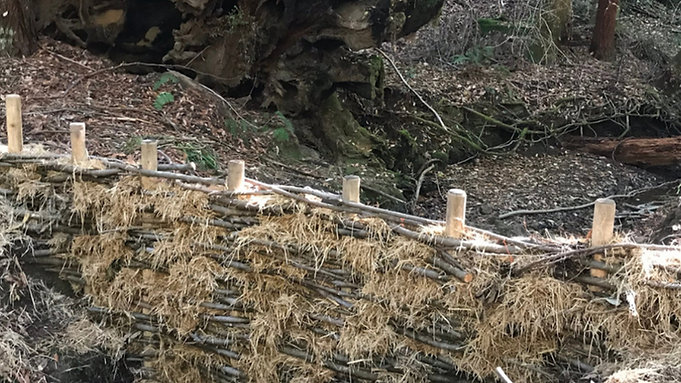
When implemented at scale, these structures offer a myriad of benefits:
-
Water Quality & Quantity: Trapping sediment, slowing stream flow, and facilitating nutrient cycling for phosphorus and nitrogen.
-
Hydraulic Stability: Stabilizing stream banks and reconnecting incised channels with their natural floodplains.
-
Groundwater Health: Elevating water tables, reducing seasonal fluctuations, and promoting the growth of riparian vegetation.
-
Ecosystem Recovery: Reversing wetland loss and enhancing overall landscape resilience.
Flood Mitigation
LTPBRs effectively manage stream velocity, improving both habitat complexity and natural filtration processes, such as microbial decomposition and chemical transformation. Unlike rigid concrete infrastructure, these permeable structures control flooding through the gradual release of water across reconnected floodplains. By stabilizing degraded streambeds, LTPBRs prevent the soil loss and biomass reduction that typically facilitate flash floods.
Wildfire Management & Recovery
Enhanced wetland habitats created by LTPBRs serve as natural firebreaks. Because higher water tables keep surrounding vegetation hydrated, these areas act as a buffer during active fires and accelerate landscape recovery afterward. Proactive implementation also reduces wildfire risk by decreasing the accumulation of dry, available fuel. For detailed discussions on these processes, see this technical overview or explore this case study on recovery settings.
Wetland & Wildlife Habitat
Water stored via LTPBRs provides a critical buffer for agriculture and livestock during drought conditions. Additionally, the attenuated upwelling of water creates "cool water" refugia downstream, expanding vital habitats for temperature-sensitive wildlife. These efforts mirror large-scale initiatives like the Colorado River Restoration Initiative, where the US Forest Service utilizes LTPBRs to improve river recovery and ecosystem functionality.
Why Work with OSRP?
The Open Spaces Resiliency Project (OSRP) offers a unique approach to stream and wetland restoration that extends beyond individual projects. By bringing together landowners, conservation organizations, researchers, and restoration professionals across Western North Carolina, OSRP helps create lasting environmental benefits at both the local and regional level.